Why Virtual Exchange is More Than Just an Online Meeting
In a world increasingly shaped by digital connectivity, the term “online meeting” has become a daily staple. However, at DigiCreate, we are championing a much deeper concept: Virtual Exchange. While many confuse the two, virtual exchange is not just a video call; it is a transformative strategy that bridges cultures, skills, and opportunities.
Defining the Experience
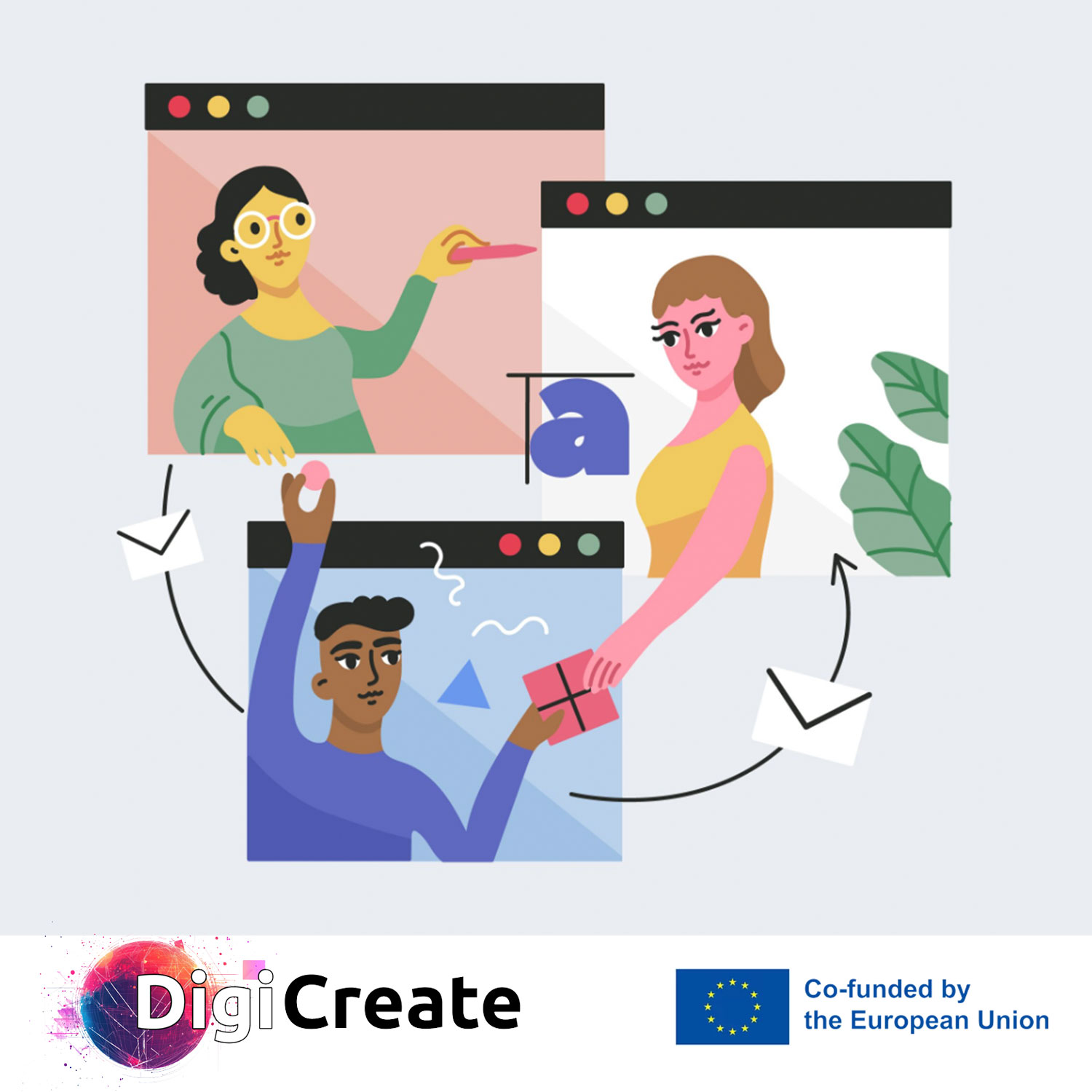
Virtual exchange is an interactive, immersive, and engaging way for people to learn together and collaborate across countries through technology. Unlike a standard meeting, which is often a functional conversation, virtual exchange consists of online people-to-people activities that promote intercultural dialogue and soft skills development. These programs allow young people to access high-quality international education without the need for physical mobility.
Bridging the Gap for the Creative Sector
For the Cultural and Creative Industries (CCI), this approach is a game-changer. Virtual exchange:
- Enhances Critical Thinking: It provides a platform to improve media literacy, helping youth to counter discrimination, polarization, and radicalization in digital spaces.
- Facilitates Authentic Practice: It offers opportunities for authentic language practice and cross-cultural collaboration that are often scarce outside the classroom.
- Develops an Intercultural Mindset: By connecting learners from geographically distant cultures, it leverages technology to place culture at the center of the creative development process.
DigiCreate: The “Opportunity Bridge”
The DigiCreate project takes this concept to the next level by specifically connecting young creatives from Germany, Spain, Portugal, Serbia, Bosnia & Herzegovina, and Montenegro.
By participating in these structured, moderated exchanges, our youth are not just “attending a meeting”; they are building an “opportunity bridge.” We believe that talent, not birthplace, should dictate success. Through the framework of Erasmus+ Virtual Exchanges, we are sparking innovation and ensuring that the creative community remains connected, resilient, and ready for the digital future.
Sources:
- European Commission, Erasmus+ Programme Guide: Virtual Exchanges
- CCSEnet, Creative Economy Teaching and Learning–A Collaborative Online International Learning Case
- Harvard Business Publishing, 10 Strategies for Launching a Successful Virtual Exchange
- ERIC/Journal of International Students, Virtual Bridges to Global Competence
Funding Agency: EACEA – European Education and Culture Executive Agency