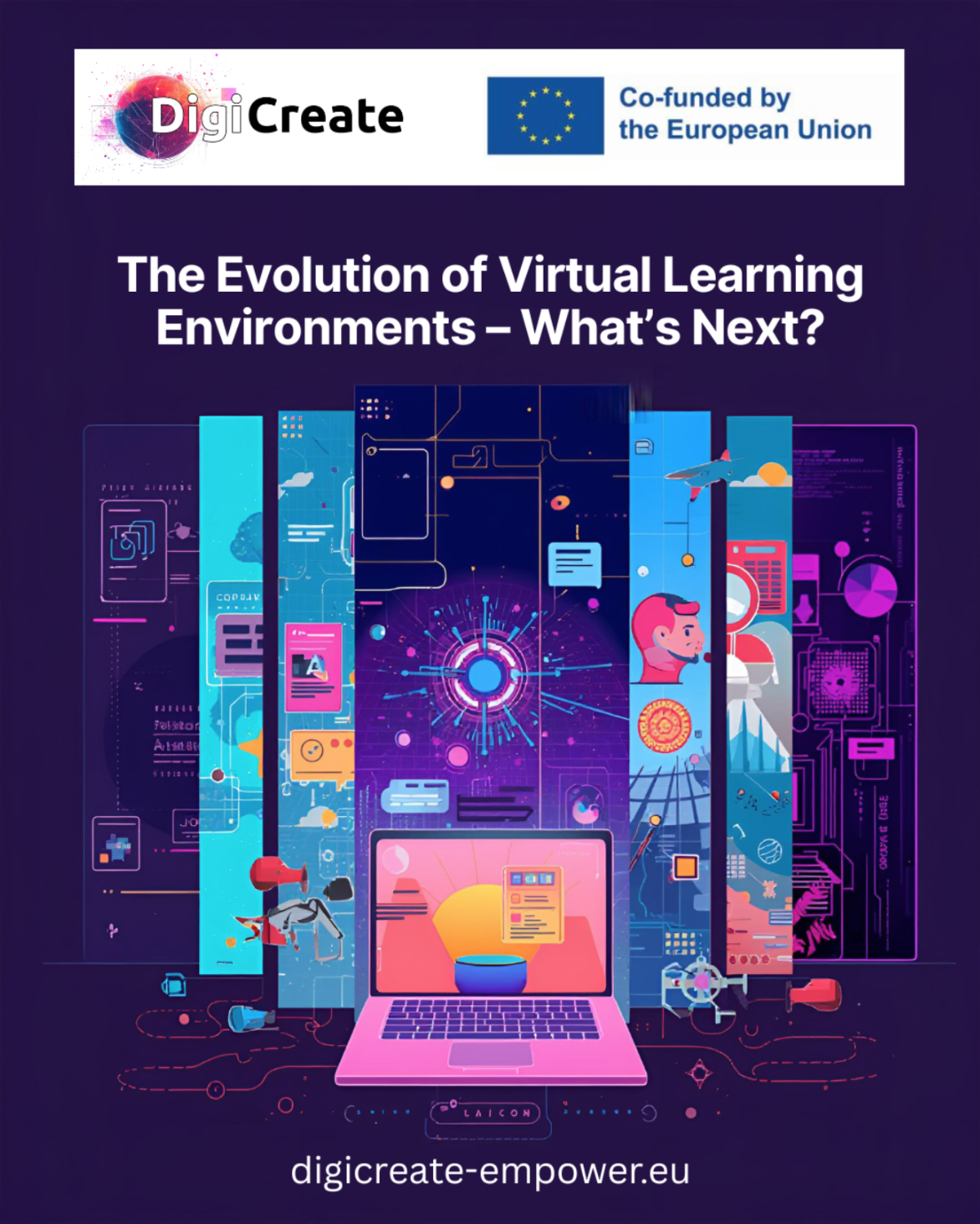
The Evolution of Virtual Learning Environments – What’s Next?
From Static Platforms to Dynamic Learning Ecosystems
Virtual Learning Environments (VLEs) have come a long way from their early days as simple repositories for lecture notes and assignments. What started as a digital extension of the classroom has evolved into a complex ecosystem that reshapes how knowledge is created, shared, and experienced. Early platforms were largely static, allowing educators to upload materials and students to submit assignments or participate in limited forum discussions. Over time, broadband internet, cloud computing, and mobile technologies enabled real-time interaction through video conferencing, collaborative documents, and discussion boards, supporting learners across geographies and schedules. The rise of blended and hybrid models further increased flexibility, while global disruptions such as the COVID-19 pandemic accelerated the shift to fully online learning, exposing both the strengths and weaknesses of VLEs.
What the DigiCreate Empower Survey Reveals
The Digicreate Empower survey, conducted with 701 respondents from Montenegro, Spain, Portugal, Germany, Bosnia and Herzegovina, and Serbia, confirms and expands on these trends. Respondents emphasized that digital fluency is essential for creative success, yet formal training opportunities are often outdated or inaccessible. Many noted that “everything they know about digital tools they learned online or from friends, not from school,” highlighting the increasing reliance on flexible, virtual learning.
Why Flexibility Matters in Virtual Learning
The research underscores the unique advantages of online learning, particularly its temporal and geographical independence. Learners can access content from anywhere, at any time, even in short intervals such as breaks or commutes, integrating education seamlessly into fast-paced professional and personal lives.
Within the survey, online courses and webinars were selected by 262 respondents (37.38%), with the highest engagement in Montenegro (63, 8.99%) and Portugal (53, 7.56%), followed by Germany (45, 6.42%), Bosnia and Herzegovina (41, 5.85%), Spain (34, 4.85%), and Serbia (26, 3.71%), highlighting how virtual learning’s flexibility is particularly valued in regions where access to in-person training may be limited.
Blended Learning Still Leads
While virtual formats are essential, the data clearly shows that learners prefer a blended approach that combines flexibility with interaction and hands-on experience.
Preferred learning methods include:
- In-person workshops: 404 selections (57.63%)
- Collaborative projects: 340 selections (48.50%)
- Mentoring: 318 selections (45.36%)
- Self-directed study: 296 selections (42.20%)
- Practical project-based work: 212 selections (30.24%)
- Gamification: 161 selections (22.97%)
These results demonstrate the importance of balancing accessibility, interactivity, and experiential learning across different contexts.
Time Commitment and Learner Readiness
The survey also explored how much time respondents are willing to dedicate to skill development:
- 38.23% are willing to dedicate 5-10 hours per week
- 32.95% prefer limited weekly engagement
- 8.13% are willing to commit more than 10 hours per week
Country-level differences reveal distinct patterns:
- Spain shows the strongest commitment:
- 77 respondents (10.98%) dedicate 5–10 hours weekly
- 15 respondents (2.14%) commit more than 10 hours
- Only 3 respondents (0.43%) are unwilling to invest time
- Montenegro favors limited (91, 12.98%) and moderate (79, 11.27%) engagement, with 16 respondents (2.28%) ready for high commitment
- Germany reports the highest proportion unwilling to dedicate additional time:
- 80 respondents (11.41%) unwilling
- 8 respondents (1.14%) willing to invest 5-10 hours
- None committing more than 10 hours
- Portugal presents a balanced profile, while Bosnia and Herzegovina and Serbia show mixed patterns across commitment levels
Designing the Next Generation of VLEs
These patterns support the design of modular, scalable, and multilingual VLE programs, responsive to diverse schedules, motivation levels, and the demands of a fast-paced, digital world. Programs offering a combination of short and moderate weekly commitments, with options for deeper immersion, can accommodate highly committed learners as well as those constrained by time or other obligations.
Emerging Trends: AI, Immersion, and Social Learning
Today, VLEs are entering a new phase characterized by adaptive, immersive, and learner-centered design. Artificial intelligence is increasingly embedded in platforms, enabling personalized learning paths, adaptive assessments, and real-time feedback. Learners can progress at their own pace, receiving content tailored to their skills, preferences, and goals, rather than a one-size-fits-all approach. Immersive technologies such as VR, AR, and MR move learning beyond screens and text, creating experiential environments for practicing skills, simulating real-world scenarios, and engaging more deeply with complex concepts.
Social learning is being reimagined as well. Modern VLEs emphasize collaboration, peer learning, and community building through learning cohorts, interactive workshops, shared digital spaces, and informal knowledge exchange, addressing one of the longstanding challenges of online education: learner isolation. This integration of collaborative and experiential methods complements the flexibility of virtual learning, bridging the gap between digital and in-person experiences.
What the Future of Virtual Learning Looks Like
Looking ahead, the evolution of VLEs will likely focus on three priorities:
Accessibility
Inclusive design, usability across devices, and adaptation for learners with diverse abilities and socio-economic backgrounds.
Flexibility
Support for lifelong learning, micro-credentials, and modular education aligned with rapidly changing labor markets.
Relevance
Strong connections between learning content and real-world challenges, ensuring skills translate into meaningful opportunities.
Conclusion: Virtual Learning as a Core Pillar of Education
In conclusion, the Digicreate Empower survey confirms that virtual learning is not merely an alternative but a critical component of modern education. By combining temporal and geographic flexibility, secure engagement, and integration with complementary methods such as mentoring, collaborative projects, and experiential workshops, VLEs enhance skill acquisition, intercultural competence, and digital fluency. The next generation of virtual learning environments will continue to evolve, integrating AI, immersive technologies, and social learning, creating human-centered experiences that complement traditional education and support continuous learning in an increasingly interconnected world.
All the data and information was collected by the Digicreate Empower consortium partners:
- Youth Power Germany EV (YP-DE) (Germany)
- Evolutionary Archetypes Consulting SL (EAC) (Spain)
- Cooperativa Para O Desenvolvimento E Coesão Social, CRL (Contextos) (Portugal)
- Univerzitet Union Nikola Tesla (UniTesla) (Serbia)
- Udruzenje Okret (SPIN) (Bosnia and Herzegovina)
- Nevladina Organizacija GLAS (NVO GLAS) (Montenegro)
- Javna Ustanova Univerzitet Crne Gore Podgorica (UoM) (Montenegro)
- Fakultet Za Poslovnu Ekonomiju I Pravo Bar (FPEP Bar) (Montenegro)
Funding Agency: EACEA – European Education and Culture Executive Agency