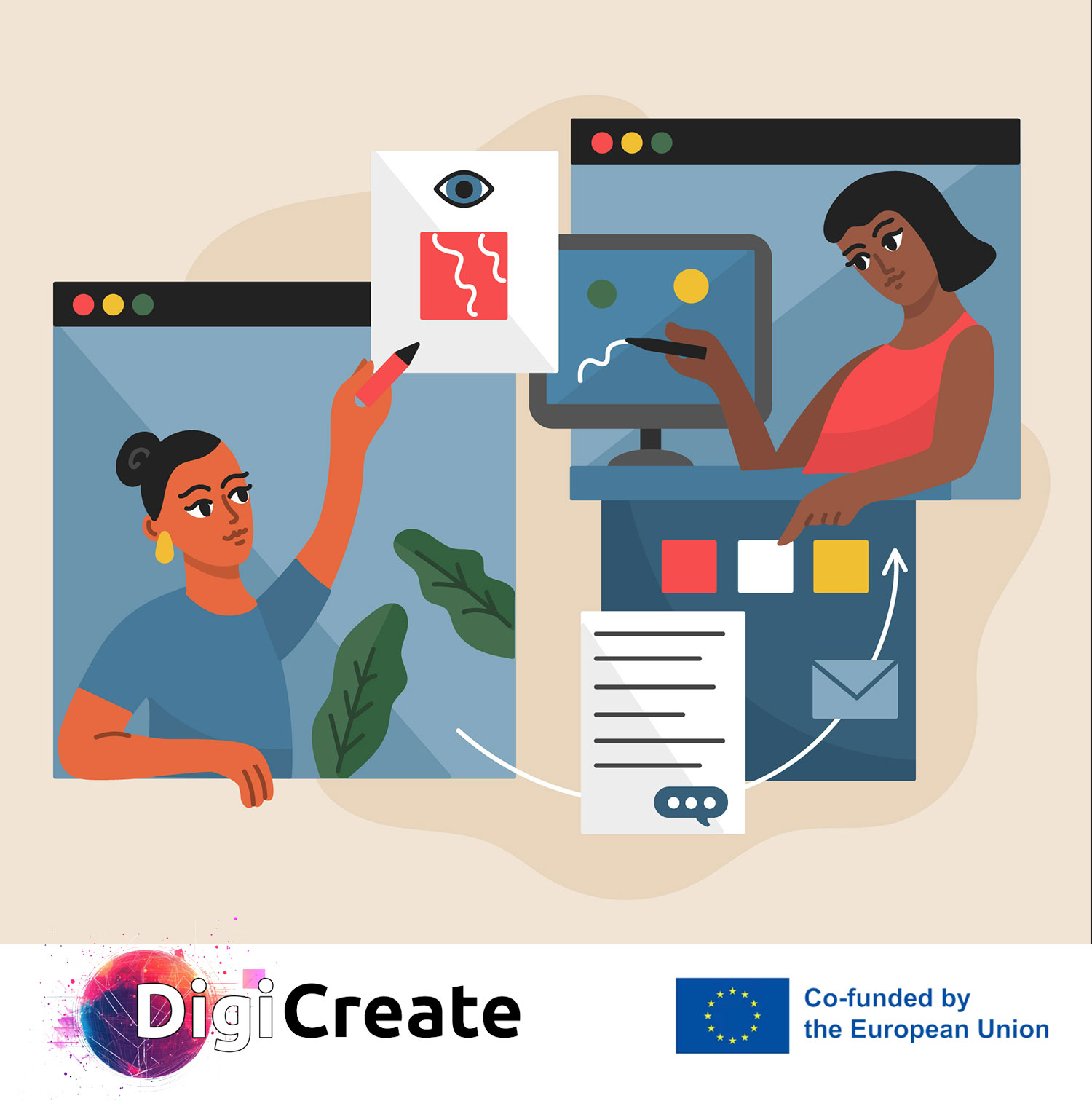
The creative process is rarely a straight line. It is filled with rough drafts, sudden pivots, and moments of deep uncertainty. For young people taking their first steps in the cultural and creative industries, sharing work for the first time can feel incredibly daunting.
All too often, the word “feedback” carries a negative connotation, evoking images of harsh red ink, strict gatekeepers, or demotivating criticism. But true artistic growth doesn’t happen in isolation.
To bridge this gap, the DigiCreate project is actively championing a healthier alternative: constructive, fear-free peer review. When managed in a supportive ecosystem, sharing work with peers shifts from a source of anxiety to a powerful engine for development.
What Makes Peer Review Healthy?
Good feedback should always aim to expand an idea, not make the creator feel small. For peer review to genuinely support growth, it needs to be rooted in three main principles:
- Specificity: Vague statements like “I don’t like it” or “It looks cool” don’t give a creator room to move. Healthy feedback pinpoints exactly what is working, whether it is a colour palette, a line of code, or narrative pacing, and isolates what needs refinement.
- Respect: Every creative project represents someone’s time, effort, and vulnerability. Constructive feedback respects the creator’s autonomy and focuses objectively on the project’s goals rather than personal tastes.
- Actionability: The best insights come wrapped with suggestions, next-step ideas, or references that inspire the creator to dive enthusiastically into the next iteration.
Connecting Creatives Across Intercultural Digital Spaces
The modern creative economy is completely decentralised, digital, and global. Through the DigiCreate initiative, we are intentionally connecting aspiring young creative minds across a diverse network of countries:
- Germany
- Spain
- Portugal
- Serbia
- Bosnia & Herzegovina
- Montenegro
When young talent from different backgrounds come together in shared digital hubs to critique one another’s work, something remarkable happens. Beyond learning how to refine their technical skills, they learn invaluable human-centric capabilities.
Navigating cross-border peer review teaches young creatives how to listen deeply, ask better questions, and respect creative choices that stem from cultural perspectives different from their own. It builds a collaborative literacy that is absolutely critical for the future of work.
Building a Safe Space for New Voices
If we want a vibrant, innovative creative sector tomorrow, we must protect the psychological safety of the young voices experimenting today. By establishing peer review cultures where mistakes are viewed as necessary steps toward excellence, we help young people shed the fear of perfectionism.
When a young creator knows they can share an unpolished idea without fear of judgment, they take bigger risks. They experiment more wildly. They innovate.
Share Your Thoughts
Establishing a safe feedback culture is a continuous, community-driven effort. We want to know how you navigate your own creative processes online!
❓ What is one small habit, boundary, or digital tool that makes receiving or giving creative feedback easier for you? Let us know!
👉 Discover more tools and resources on the DigiCreate Platform
Funding Agency: EACEA – European Education and Culture Executive Agency