Understanding What Helps Creative Careers Grow
The Cultural and Creative Industries (CCI) are powerful spaces for innovation, storytelling, and cultural exchange. Building a sustainable career in this dynamic sector is supported by access to the right resources, skills, and professional networks.
To better understand how creative careers develop, the DigiCreate Empower project gathered insights from 701 young creatives across six countries: Germany, Spain, Portugal, Serbia, Bosnia and Herzegovina, and Montenegro.
The research highlights the key factors that help creatives strengthen their career pathways, develop skills, and connect with opportunities in evolving creative ecosystems.
Key Support Factors for Creative Professionals
Among creatives with professional experience, the research highlights several areas where access to resources and networks can further strengthen career development:
- Financial support (public funding, private sponsorships)
- Mentorship and professional guidance
- Training and educational programs
- Networking and collaboration opportunities
- Access to tools, equipment, and infrastructure
- Marketing, technical, and legal support
- Emotional and peer-based support
Participants also highlighted the importance of recognition of creative professions, supportive regulatory environments, and social protection frameworks that reflect the realities of freelance and project-based work.
These insights show that creative careers grow through a combination of talent, resources, and supportive professional ecosystems.
Support for Experienced Creatives
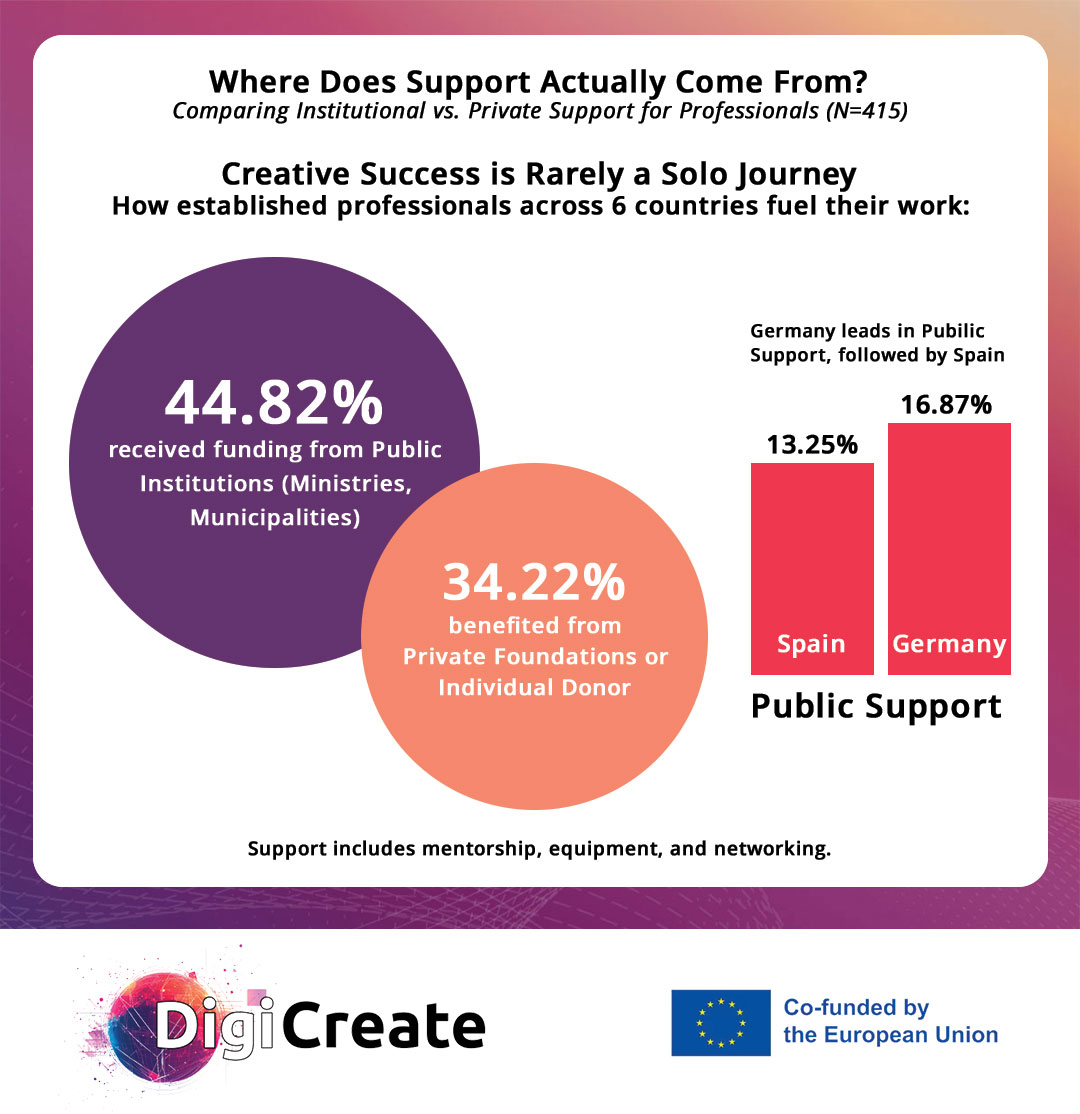
Among 415 respondents with work experience, support systems play a central role in sustaining and advancing careers.
The most common forms of support include:
- Participation in training or educational programs (45.30%)
- Financial support from public institutions (44.82%)
- Mentorship and professional guidance (41.45%)
Networking (28.19%) and collaboration opportunities (26.02%) also play an important role, highlighting the value of professional communities.
Creatives could benefit from higher access to specialized support.
Currently, many creatives still require:
- Marketing or promotion support (12.77%)
- Legal or administrative support (12.05%), and
- Technical assistance (11.81%)
Emotional support (often coming from friends, family, or peers) is reported by 21.93% of respondents, underlining the importance of informal networks.
While around 89% of creatives have support, around 11–12% of creatives who have not received support will especially benefit from exploring opportunities to connect with support networks.
Most Common Support for Creatives Starting Out
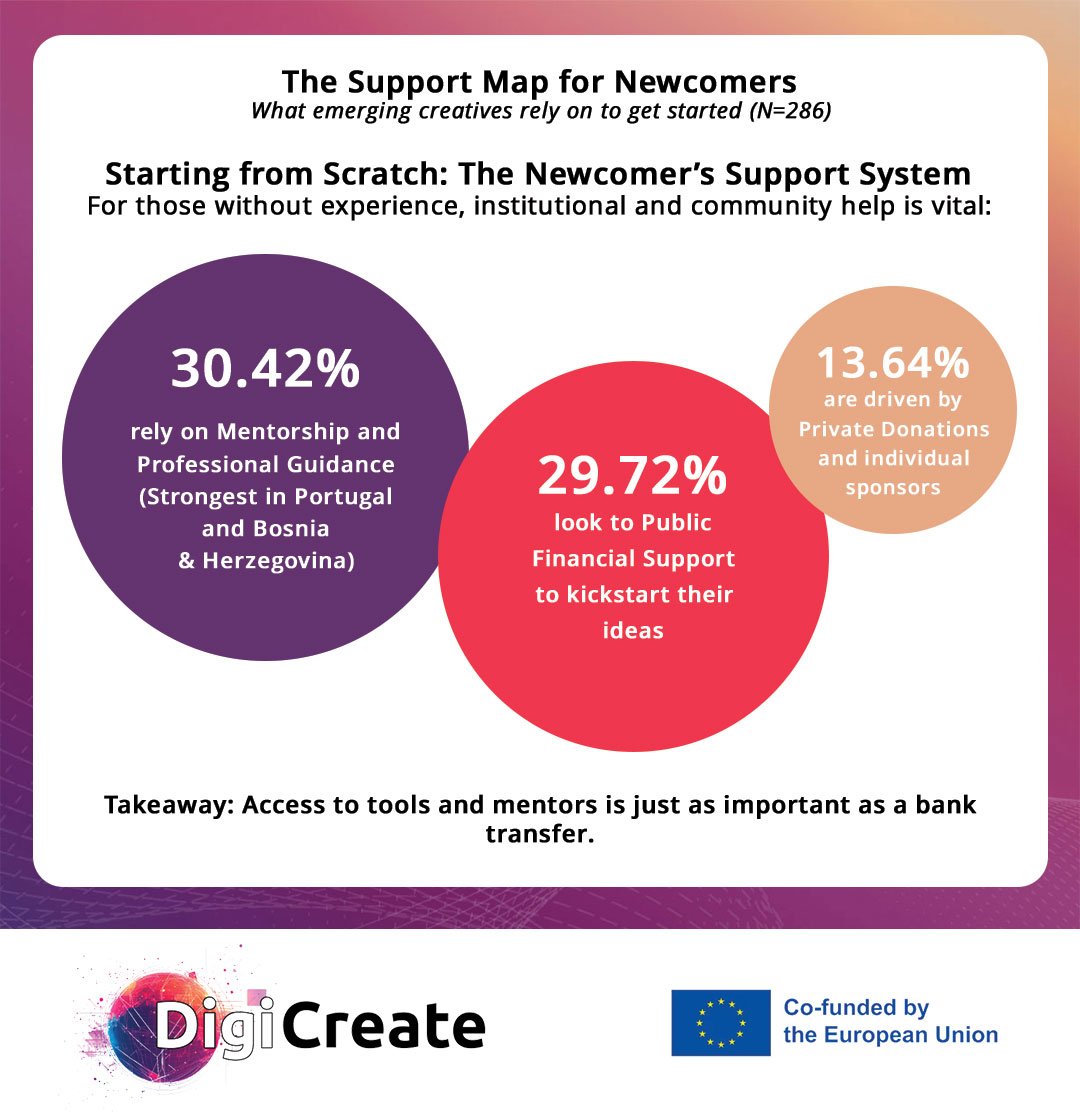
For those without prior work experience (286 respondents), the most important forms of support include:
- Training and educational programs (33.22%)
- Mentorship and professional guidance (30.42%)
- Financial support from public institutions (29.72%)
Emerging creatives also rely on:
- Networking opportunities (18.88%)
- Collaboration (24.13%)
- Access to materials and equipment (11.89%)
While around 67% of young creatives have had opportunities to access support, over 32% still require additional support, and 8.39% are working independently without support.
These findings highlight that young creatives particularly benefit from mentorship and support.
Regional Differences in Support Systems
The research shows clear country-level differences in how support systems function:
- Germany and Spain demonstrate strong institutional support, including funding, mentorship, and structured training programs.
- Portugal presents a balanced ecosystem, combining education, networking, and collaboration opportunities.
- Western Balkan countries (Montenegro, Bosnia and Herzegovina, and Serbia) rely more heavily on public funding, informal networks, and community-based support.
In these regions, emotional and peer support often compensates for limited access to formal programs, highlighting both the resilience of creative communities and the need for stronger institutional frameworks.
Why Support Systems Matter
Support systems are essential drivers of creative careers.
The research shows that access to support directly contributes to:
- Skill development (digital, entrepreneurial, and intercultural)
- Career progression and sustainability
- Professional confidence and visibility
- Collaboration and international opportunities
Importantly, both formal (institutional) and informal (peer-based) support systems play complementary roles.
Beyond Resources: Building Skills for the Future
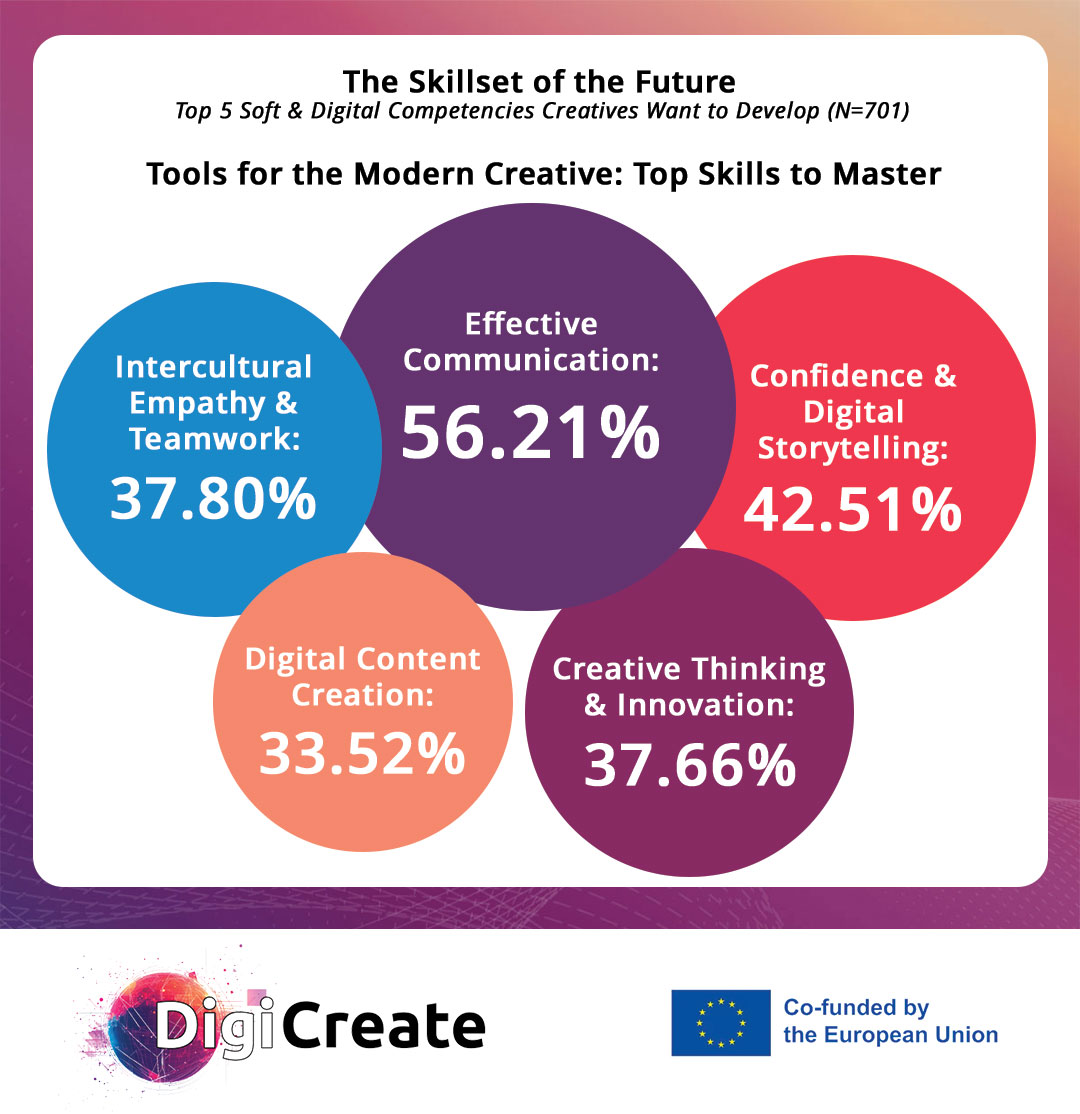
The study also highlights the importance of soft and digital competencies in navigating creative careers.
The most desired skills among creatives include:
- Effective communication (56.21%)
- Confidence, public speaking, and storytelling (42.51%)
- Intercultural understanding and teamwork (37.80%)
- Creative thinking and innovation (37.66%)
- Digital content creation (33.52%)
These skills are increasingly essential in a global, digital, and collaborative creative environment.
Supporting Sustainable Creative Careers
Creative careers thrive where support systems are accessible, diverse, and well-connected.
The DIGICREATE Empowerr project highlights that building a sustainable creative sector includes creating strong ecosystems that support learning, collaboration, and growth at every stage.
By investing in both structured programs and community-based support through our Digital Hive and Creative and Virtual Exchange Program, we can create more inclusive opportunities and empower the next generation of creatives to succeed.
Read more about the DIGICREATE Empower research in our report (https://digicreate-empower.eu/wp-content/uploads/2026/03/D2-1-DigiCreate-1.-Surveys-and-focus-group-discussions-with-young-people-in-the-creative-industries-in-local-communities.pdf).
Funding Agency: EACEA – European Education and Culture Executive Agency