The Cultural and Creative Industries (CCI) offer strong opportunities for innovation, storytelling, and cultural exchange. Building a sustainable career in this dynamic sector requires not only talent but also access to supportive ecosystems, resources, and professional networks.
New research from the Digicreate Empower project explored the experiences of 701 young creatives across six countries: Germany, Spain, Portugal, Serbia, Bosnia and Herzegovina, and Montenegro.
The findings highlight key financial, structural, and psychological factors that shape career development for both newcomers and experienced professionals.
Key Barriers for Creative Professionals
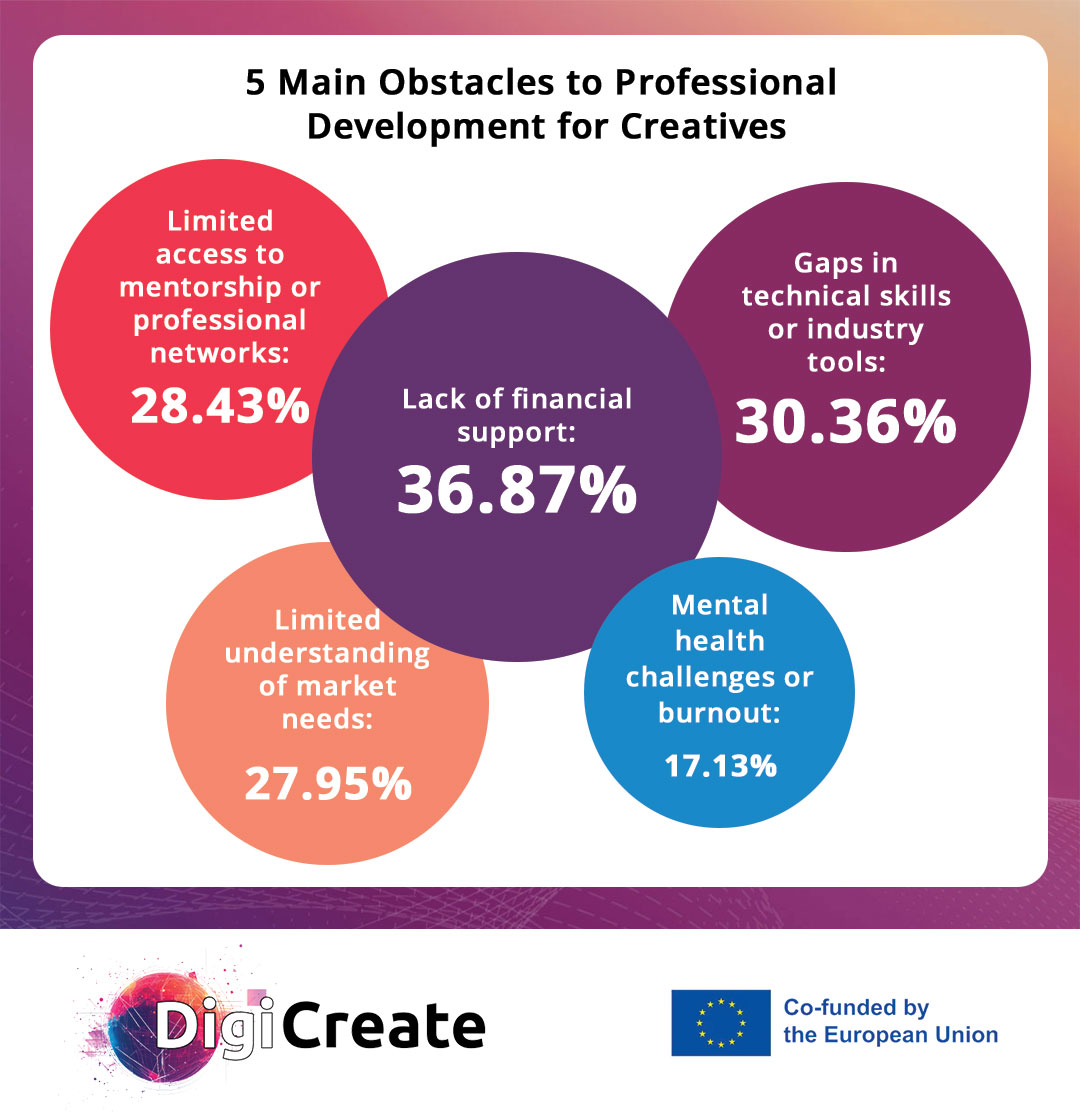
Among 415 creatives with work experience, the most common challenges are financial and structural:
The main areas where additional support can strengthen career development include:
- Need for financial support mechanisms (36.87%)
- Need for technical skills or industry tools (30.36%)
- Access to mentorship or professional networks (28.43%)
- Understanding market needs and opportunities (27.95%)
- Importance of mental well-being and resilience (17.13%)
Additional areas highlighted by participants include recognition of creative professions, supportive regulatory environments, and social protection frameworks for freelance work. Respondents also emphasized the importance of confidence-building and supportive professional environments that encourage experimentation, learning, and innovation. These findings highlight how creative careers are shaped not only by talent but also by financial stability, professional networks, and access to resources.
Challenges for Early Career Creatives
For those at the beginning of their careers, clear guidance and accessible learning opportunities play an especially important role.
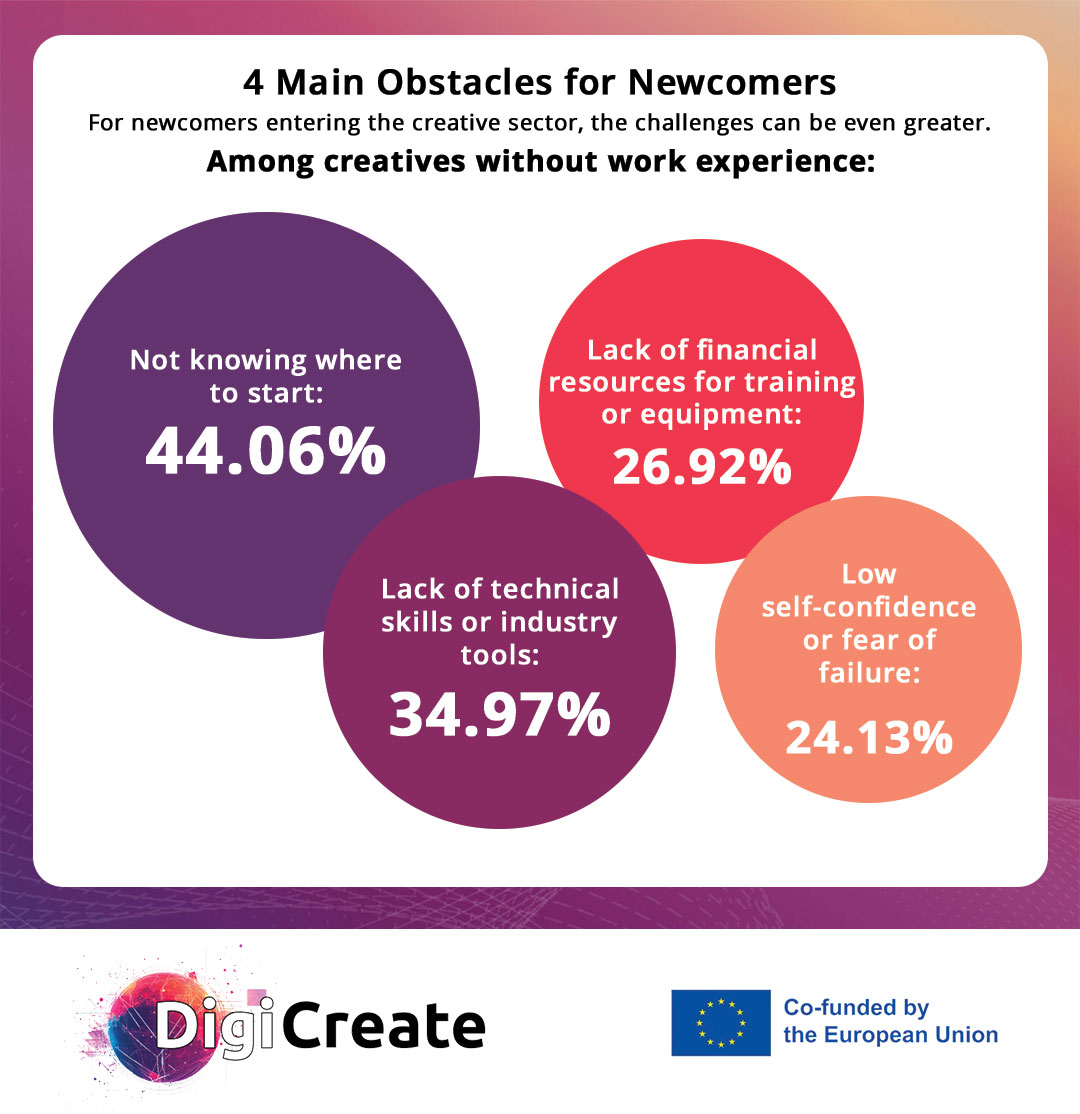
Among 286 respondents without work experience, the most significant challenges include:
- Orientation and clarity on how to start a creative career (44.06%)
- Development of technical skills and access to professional tools (34.97%)
- Financial resources for training or equipment (26.92%)
- Confidence-building and professional guidance (24.13%)
- Access to mentorship opportunities (23.43%)
These findings highlight the importance of clear career pathways, accessible training, and supportive networks for young creatives entering the field.
What Drives Creative Careers?
Alongside support needs, the research highlights strong motivating factors that inspire creative professionals and contribute to career development.
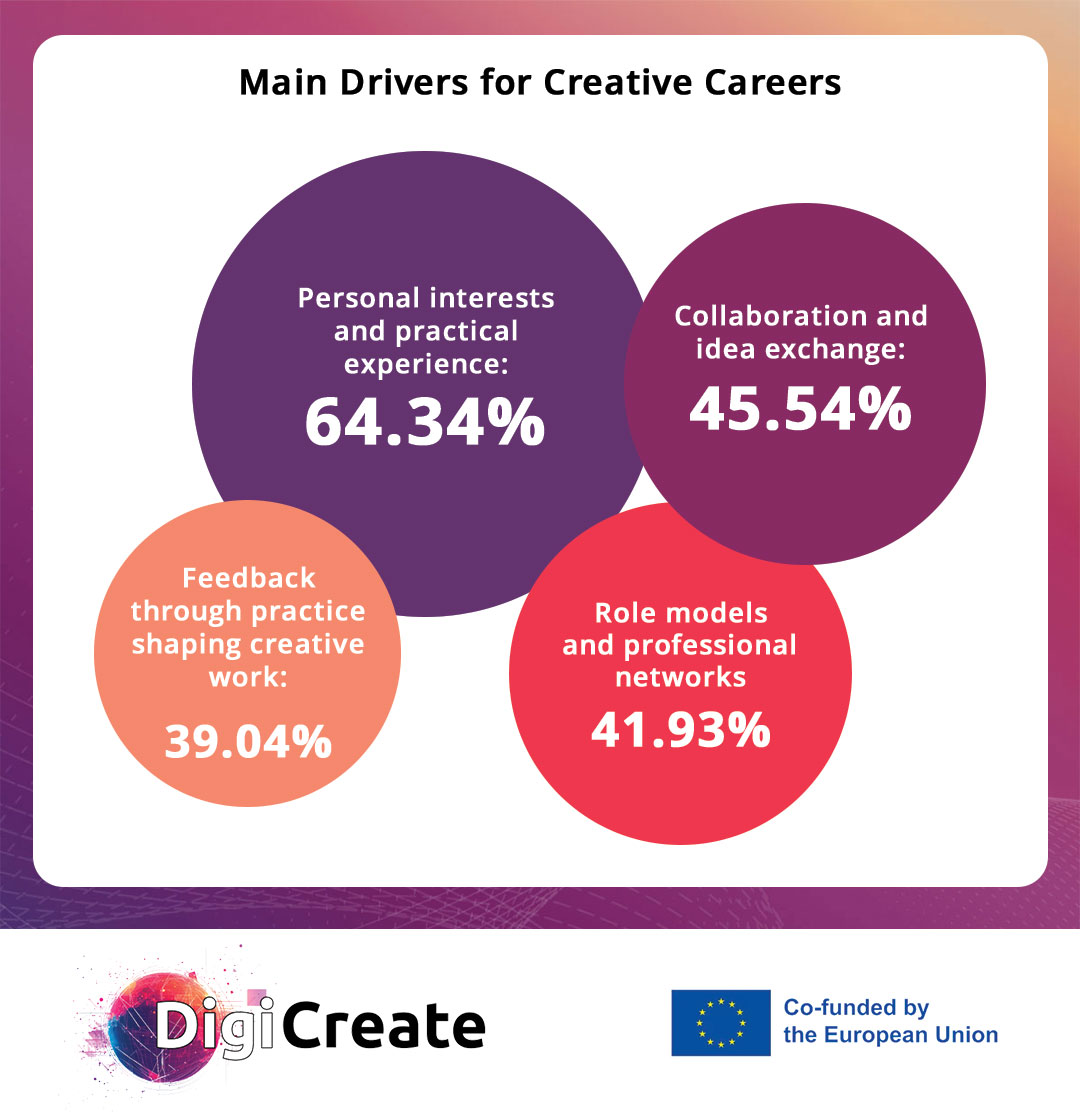
Among respondents with work experience, the most influential drivers include:
- Personal interests and practical experience (64.34%)
- Collaboration and exchange of ideas (45.54%)
- Role models and professional networks (41.93%)
- Feedback and learning through practice (39.04%)
Exposure to multicultural environments, interdisciplinary collaboration, and evolving market trends also play an important role in shaping creative career paths.
These findings underline the importance of collaboration, experimentation, and continuous learning as key elements of professional growth in the Cultural and Creative Industries.
Finding Solutions to Support the Next Generation of Creatives
Overall, the research shows that creative careers develop through a combination of passion, collaboration, and access to opportunities.
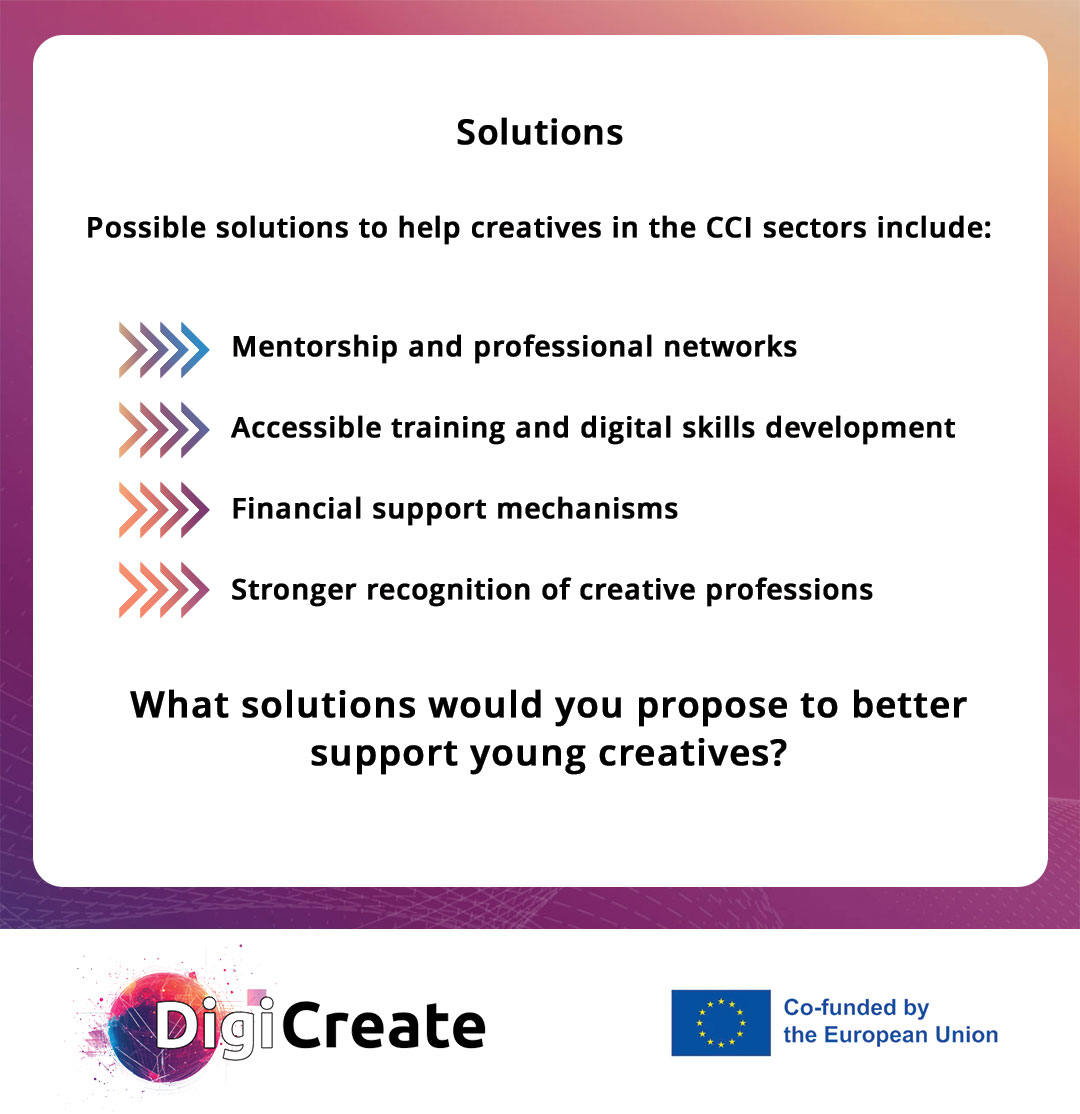
Strengthening creative ecosystems through mentorship, training opportunities, financial support, and recognition of creative professions can further enhance sustainable career pathways.
Addressing these challenges requires targeted support measures, including:
- Mentorship and professional networks
- Accessible training and digital skills development
- Financial support mechanisms
- Recognition of the value of creative professions
- Opportunities for collaboration and knowledge exchange
Through research, collaboration, and innovative learning initiatives, the Digicreate Empower project contributes to building supportive environments where young creatives can develop sustainable and fulfilling careers in the Cultural and Creative Industries.
Funding Agency: EACEA – European Education and Culture Executive Agency