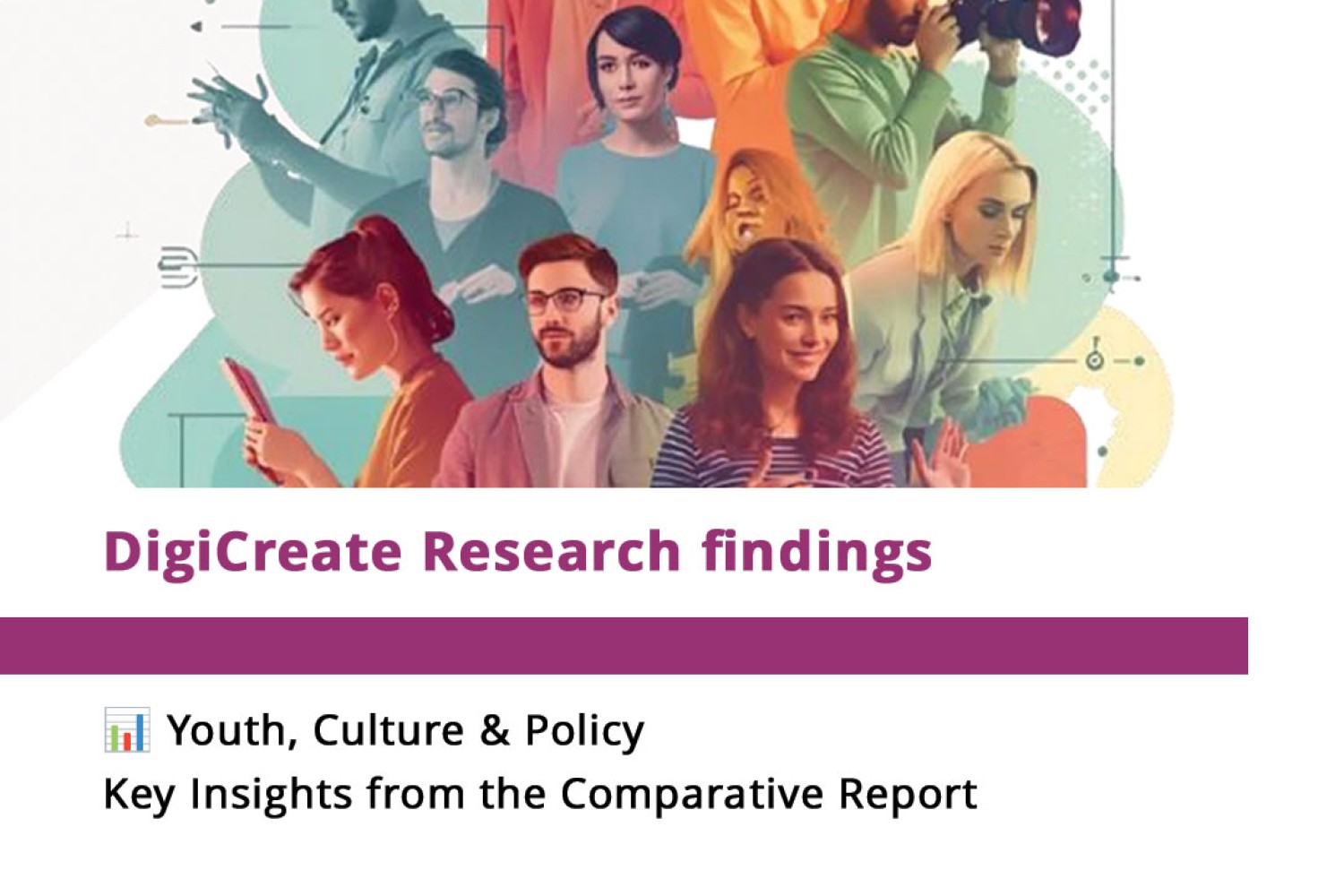
The DigiCreate Research Report explores how policies, funding structures, and inclusion frameworks influence youth engagement in Cultural and Creative Industries (CCI) across six European and Western Balkan countries.
This week, we focus on two structural dimensions that directly shape opportunity: Policies, Institutions, and Funding, and Inclusion and Accessibility.
Policies, Institutions, and Funding
Across the six countries, policy frameworks for culture and youth exist, but funding levels, coordination, and long-term sustainability vary significantly.
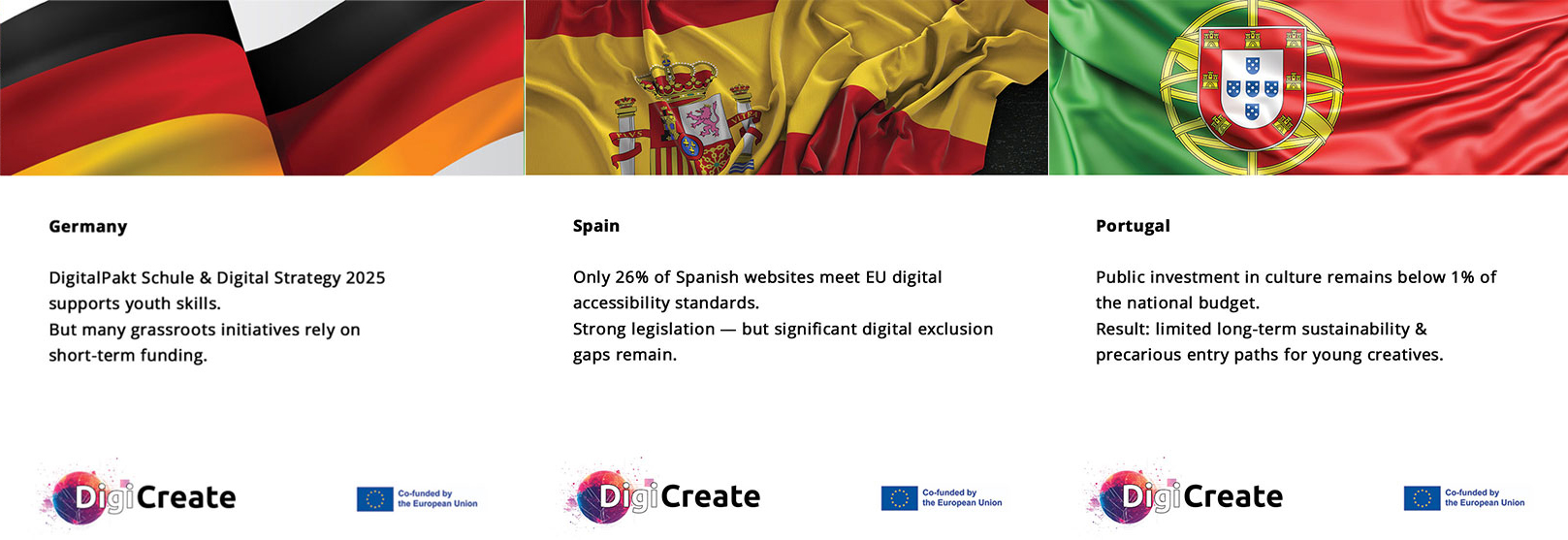
Germany integrates CCI development into broader digital and vocational policies. Programs such as DigitalPakt Schule support digital skills development, though creative sector funding varies by region.
In Portugal, public investment in culture remains below 1% of the national budget, consistently below the European average. National frameworks such as INCoDe.2030 and the Digital Transition Action Plan aim to strengthen digital and creative skills, but funding constraints continue to limit sectoral growth.
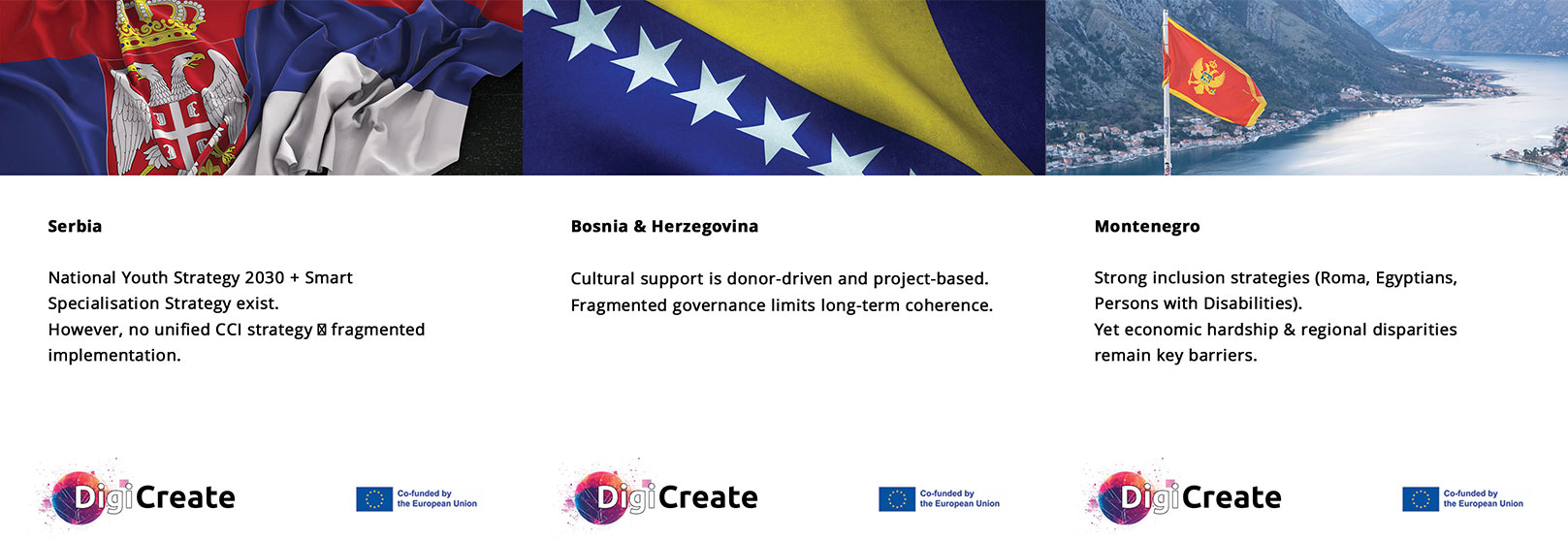
Serbia operates under the National Youth Strategy 2030 and the Cultural Development Strategy 2020-2029. While coordination has improved through initiatives such as Serbia Creates, the absence of a unified CCI strategy results in fragmented implementation.
Montenegro has adopted structured frameworks including the Youth Strategy 2023-2027 and the National Programme for Cultural Development 2023-2027. Participation in Creative Europe 2021-2027 further strengthens integration with EU cultural funding mechanisms.
In Bosnia and Herzegovina, CCI support is largely project-based and donor-driven, limiting long-term institutional stability.
Key structural patterns across countries include:
- Public cultural funding often below EU averages
- Fragmented interministerial coordination
- Short-term funding cycles
- Limited youth participation in policy co-creation
Youth creativity is present. Policy alignment determines how far it can grow.
Inclusion and Accessibility
Inclusion remains one of the most decisive factors shaping equitable participation in Cultural and Creative Industries.
In Spain, accessibility frameworks exist, including the Spanish Disability Strategy 2022-2030. However, only 26% of Spanish websites comply with EU digital accessibility standards, limiting digital participation for youth with disabilities.
Portugal continues to face structural underrepresentation of rural, migrant, and low-income youth in higher arts education and cultural employment.
In Serbia and Bosnia and Herzegovina, inclusion initiatives are frequently project-based and supported by civil society rather than embedded in long-term national funding frameworks.
Montenegro has adopted targeted inclusion strategies, including the Strategy for Social Inclusion of Roma and Egyptians 2021-2025 and the Strategy for Persons with Disabilities 2022-2027. Progress has been reported in participation rates, yet sustainable financing remains necessary.
Across all six countries, common barriers include:
- Economic hardship
- Geographic disparities
- Digital exclusion
- Limited professional networks
Inclusion policies exist. Implementation depth determines real access.
What This Means for Youth Engagement
Policies shape opportunity.
Funding determines sustainability.
Inclusion defines who gets to participate.
For youth engagement in Cultural and Creative Industries to expand, governance systems must move from strategy design to structured, long-term implementation.
Funding Agency: EACEA – European Education and Culture Executive Agency