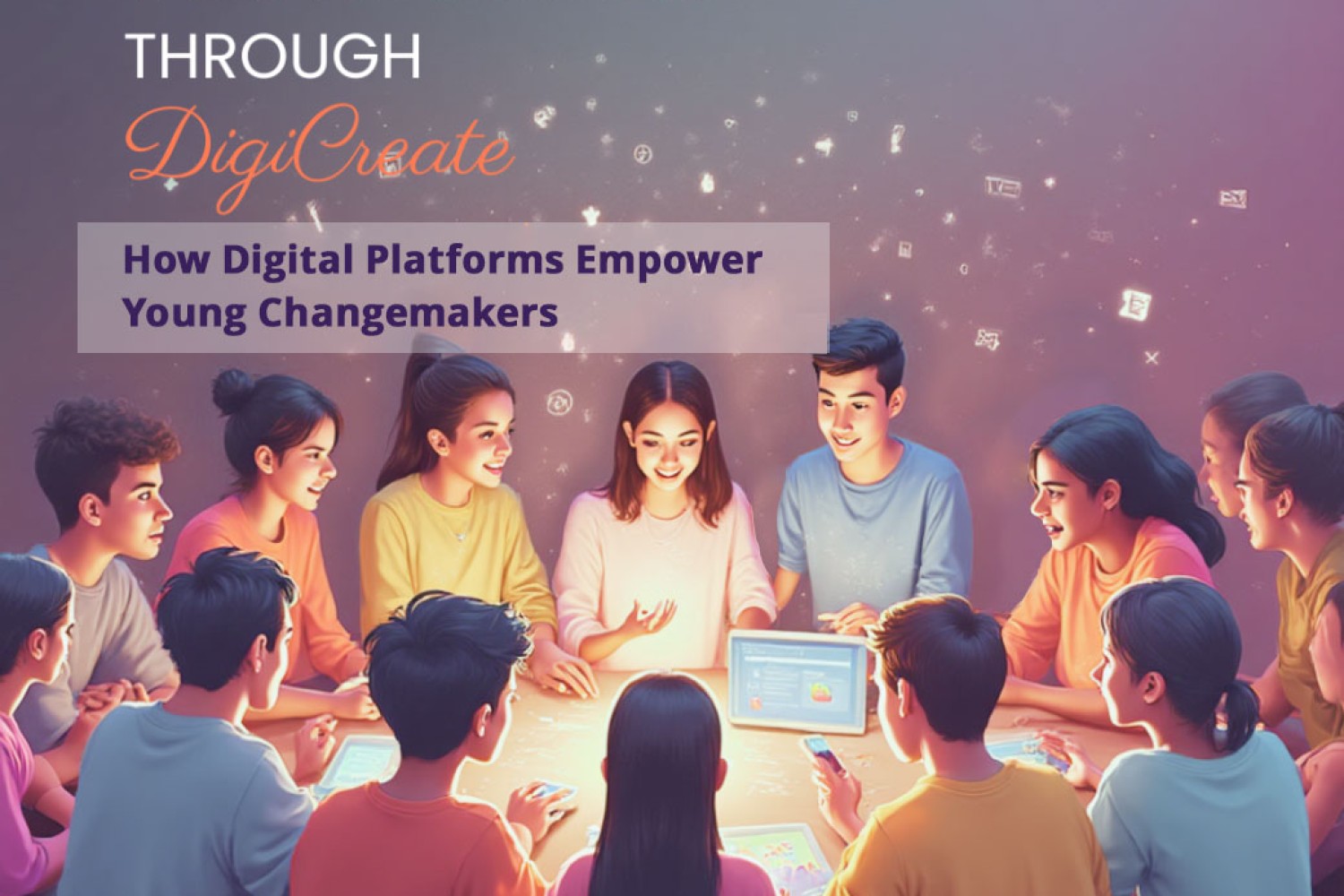
Amplifying Youth Voices Through DigiCreate – How Digital Platforms Empower Young Changemakers
Young people today are not waiting to be invited into public conversations—they are creating their own spaces, shaping their own narratives, and using digital platforms to turn ideas into action. From short-form video and digital art to online campaigns, podcasts, and collaborative platforms, creativity has become one of the strongest tools young people use to express identity, challenge norms, and initiate change.
Digicreate builds on this reality. The project recognizes that digital platforms are spaces of empowerment. When used intentionally, they allow young people to move from being passive consumers of content to active creators, storytellers, and changemakers within their communities and beyond. For many young people, especially those navigating uncertainty, limited opportunities, or non-traditional career paths, creativity becomes a language and digital tools make that language visible. They allow voices to travel across borders, connect with peers, and reach audiences that were once inaccessible.
Our research across six European and Western Balkan countries shows that young creatives are already embracing this language. They are fluent in tools for communication and visual production (like Canva, Photoshop, Premiere Pro, and DaVinci Resolve) and are constantly experimenting with new formats and styles. Yet only a fifth consider themselves digitally advanced, and many still struggle with emerging technologies such as AI, coding, or digital marketing. What’s striking is how much ingenuity they show despite these gaps: in the Western Balkans, for instance, youth rely on free or open-source tools to create professional-quality work, demonstrating creativity not just in content, but in overcoming resource limitations.
But technical skill is only one side of the story. Creativity is deeply social and civic: respondents with experience in the sector describe using their work to express personal or cultural identity, educate others, promote intercultural understanding, or raise awareness about social and environmental issues. Others focus on wellbeing, community mobilization, human rights, or heritage preservation. Even those just starting out channel their energy into projects that combine personal expression with social impact, showing that young people naturally see creative work as a vehicle for change.
The survey also reveals a clear desire for learning that matches this multi-dimensional approach. Young people prefer short, hands-on workshops, collaborative projects, and mentorship opportunities, rather than traditional courses. They value the combination of digital competence and soft skills (creativity, communication, adaptability, teamwork) and they thrive when these can be developed together. Peer exchange is a natural habit, and co-creation multiplies its impact. In short, the most effective learning happens when youth are given tools, space, and guidance to experiment and connect, not just follow instructions.
Regional patterns further illustrate how local context shapes creative practices. In Germany and Spain, identity expression, education, and social engagement are prominent; in Portugal, innovation blends with cultural diversity; and in the Western Balkans, resourcefulness and motivation shine despite infrastructural challenges. Across all contexts, creativity functions simultaneously as a channel for personal growth, societal transformation, public awareness, emotional support, cultural preservation, and professional development.
DigiCreate takes these insights to heart. Its Online Creative Hive Open Digital Toolbox will be designed not just as a collection of tools, but as a participatory, modular, and community-driven space where young creatives can build confidence, exchange ideas, and co-create solutions that reflect Europe’s cultural and technological diversity. By combining practical digital skills, collaborative learning, and social impact, the project helps young people move from creating for themselves to creating for their communities, and ultimately, to shaping the world around them.
In a time of rapid social, technological, and cultural change, young voices bring urgency, imagination, and new perspectives. DigiCreate amplifies these voices not by speaking for young people, but by creating conditions in which they can speak for themselves. Confidently, creatively, and on their own terms. Because when young people are empowered to create, they don’t just tell stories – they change them.